

Books, Courses, and AI Tools: How Creators Should Choose What to Use Next
There are few things more dangerous to a creative entrepreneur than a shelf full of useful ideas and no plan for using them.
The book was good. The course made sense. The AI tool gave you a surprisingly clean checklist. You nodded along, highlighted half the chapter, copied a few prompts, maybe even opened a new document with the kind of title that suggests a breakthrough was imminent.
Then the week got loud.
A client needed an update. Your kids needed dinner. The edit took longer than expected. The inbox kept making little demands like an emotionally needy raccoon. By Friday, the idea that felt clear on Monday had become one more good thought floating somewhere above the business.
This is why the format matters, but not in the way people usually think. The question is not whether books are better than courses or AI tools are better than templates. That’s the wrong fight. Each format serves a different kind of need.
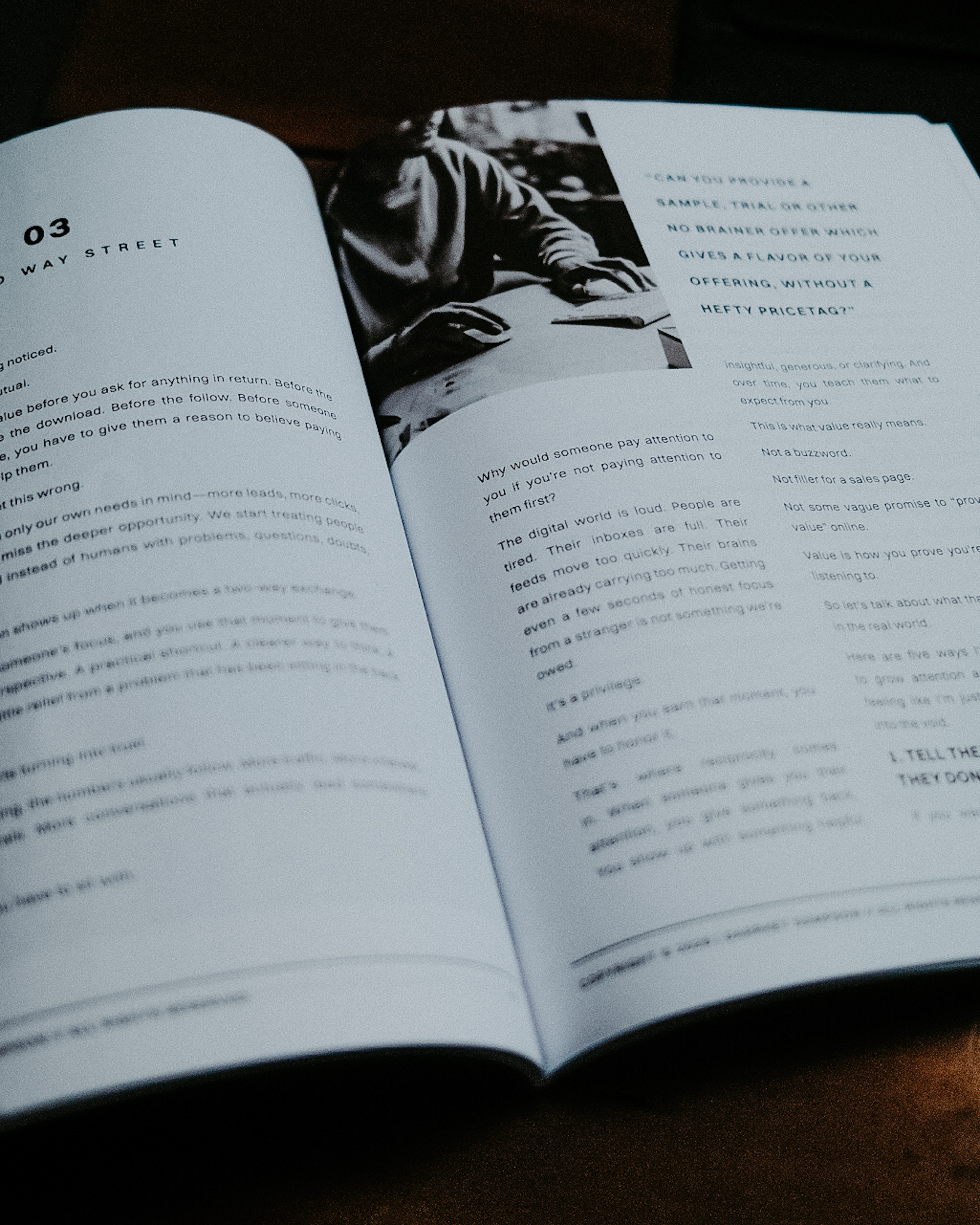
Books give you perspective. Courses give you structure. AI tools help with implementation.
The goal is not to collect formats.
The goal is momentum.
Use Books When You Need Perspective
A good book changes the way you see the problem.
That matters because many creators are trying to solve business issues from the wrong angle. They think they need more motivation when they really need a better system. They think they need a new logo when they really need message clarity. They think they need more content when the offer itself is hard to explain. They think pricing is only a confidence issue when the real issue is weak packaging, fuzzy scope, or no stable income structure behind the work.
Books are useful because they give language to something you’ve been feeling but haven’t fully named yet. They slow the problem down. They help you step back from the daily noise and see the pattern underneath it.
That’s what I want the Field Guides to do. I don’t want a creator to finish a book and feel entertained for an afternoon. I want them to have a clearer way to understand the pressure they’ve been carrying. A good book should make the fog thinner.
Books are especially useful when you’re early in a problem. You know something is off, but you don’t yet know what kind of help you need. Reading gives you enough perspective to diagnose before you act.
That said, reading can become a very polished form of avoidance. Highlighting a sentence is not the same as changing the business. Nodding at an idea is not implementation. Perspective is powerful, but it needs somewhere to go.
Use Courses When You Need Structure
A course is useful when you need the idea broken into a sequence.
This is where many creators benefit from more than perspective. They don’t just need to understand that their pricing is weak, their visibility is inconsistent, or their systems are scattered. They need a guided path through the work. They need a lesson, an exercise, a framework, and a reason to keep moving when the first burst of motivation wears off.
Courses are good for problems that require several steps. Brand strategy is rarely solved by one insight. Pricing is not fixed by reading one chapter and declaring yourself expensive now, which is bold but not always operationally sound. Business systems take repetition. Visibility takes rhythm. A course helps you move through those layers without reinventing the sequence every week.
The best course does not bury you in content. It helps you make decisions.
That distinction matters. A bloated course can leave a creator feeling more behind than before. Every unfinished module becomes another tiny accusation. A useful course should give you enough teaching to understand the work and enough structure to apply it without drowning in information.
If you know the issue and need guided implementation, choose a course. If you keep saying, “I know what I need to do, but I don’t know where to start,” a course may give the work a spine.
Use AI When You Need Help Implementing
AI is most useful after you know what you’re trying to do.
That’s the line I care about. I don’t want AI to think for the creator. I don’t want it replacing taste, leadership, story, or judgment. Those are the human parts. Those are the parts that come from experience, pressure, personality, values, and the slow work of building a point of view.
But AI can reduce friction between learning and doing.
After you read a Field Guide, AI can help turn a concept into a checklist. After a course lesson, it can help draft a weekly implementation plan. It can take messy notes and organize them into a content outline. It can compare offer language, create client email drafts, generate reflection questions, or help you identify which next step is actually small enough to finish.
That is not a replacement for creative judgment. It is a support system around implementation.
Think of AI as an assistant standing near the workbench. It can hand you tools, organize materials, label the parts, and help you see what comes next. It should not decide what you’re building or why it matters.
Creators who use AI well usually keep leadership in their own hands. They give it context. They evaluate the output. They rewrite. They adjust. They decide what fits their voice, audience, and standards.
AI is fast. That’s useful. But fast is only good when it’s moving in the right direction.
Pair the Formats Instead of Choosing One Forever
The strongest approach is often not choosing one format. It’s knowing how to pair them.
You might read a Field Guide to understand the issue. Then you might work through a Field Academy lesson to apply the concept. Then you might use an AI workflow to turn that lesson into specific actions for the week.
That sequence keeps each format in its proper place.
The book gives perspective. The course gives structure. The AI tool helps with execution. None of them has to carry the whole business by itself.
This is especially helpful for creators who have a habit of learning without implementing. The resource becomes more useful when it has a next step attached. After a chapter, ask what you will change this week. After a lesson, create one deliverable. After an AI prompt, decide what output actually gets used.
Momentum is built through completed actions, not accumulated resources.
A creator might read about clarifying their offer, then use a course exercise to define the audience, problem, promise, and proof. After that, AI can help generate ten alternate headline options, a clearer service description, or a checklist for updating the website.
That is how learning becomes business infrastructure instead of shelf decoration.
Choose Based on the Resistance
One of the simplest ways to choose the right format is to ask what kind of resistance you’re facing.
If you’re confused, start with a book. You probably need perspective and language before you need another assignment.
If you’re inconsistent, choose a course. You likely need structure, sequence, and a reason to keep returning to the work.
If you’re stalled between knowing and doing, use AI. You may need help turning an idea into a draft, checklist, plan, or first version.
If you’re overwhelmed, start smaller than you think. One book, one lesson, one prompt, one action. Creative entrepreneurs often make the mistake of turning personal development into a second job. They collect resources like they’re building a private university for one exhausted person.
You don’t need to consume everything.
You need to move.
That might mean choosing the shortest path to the next useful decision. It might mean reading one chapter and updating one offer. It might mean taking one lesson and applying it to one client workflow. It might mean using one prompt to organize one week.
Small implementation beats large intention.
The Resource Is Not the Point
The format is not the goal. The finished course is not the trophy. The highlighted book is not the business. The prompt is not the strategy.
The goal is a stronger creative business around the work you care about.
Choose the resource that helps you take the next meaningful step. Not the one that feels most impressive. Not the one everyone else is talking about. Not the one that makes you feel productive for buying it.
If a book gives you language, read it. If a course gives you structure, work through it. If AI helps you implement, use it. Then return to the work with more clarity than you had before.
That’s the rhythm.
Learn enough to see clearly. Apply enough to create movement. Use tools that reduce friction without outsourcing the parts of the work that make it yours.
But the right resource can make the next step less foggy.