

How to Build a Creative Business That Can Hold Real Life
There are seasons when creative work stops being an idea and becomes a necessity.
Not in the dramatic, romanticized way people sometimes talk about betting on themselves. I don’t mean quitting a job with a laptop, a coffee shop, and a carefully edited announcement post. I mean the kind of necessity that shows up when life has come apart, the bank account is thin, children need stability, and the work in your hands has to become more than expression.
It has to become provision.
Years ago, my life collapsed into a shape I never wanted. My marriage ended after choices I could not control, and suddenly I was left trying to rebuild with two boys, one five years old and one only five months old. The money was gone. The future I thought we were building was gone. The city we lived in no longer made sense because we could not afford to stay there. Our renters graciously let us out of our lease, and I moved to Missoula to be near family and try to find a way forward.
It was not a clean beginning.
It was boxes, court dates, baby bottles, school schedules, unanswered questions, and the strange silence that comes after a life you fought for finally breaks. It was the kind of season where every small decision felt connected to survival. Where do we live? How do I work? Who watches the boys? What can I build with the skills I still have? What future am I willing to accept for them?
I did not need a creative business that looked impressive from the outside.
I needed one that could hold a real life.
Start With the Life Your Business Needs to Support
A lot of creators build businesses around the work they want to make, but they do not always build around the life the work has to support.
That difference matters.
A business can look successful and still be fragile. It can have good branding, decent income, attractive products, and a full calendar while still depending entirely on your constant availability. If everything breaks the moment you get sick, your child needs you, a client delays payment, or your emotional life becomes heavier than expected, the business may be busier than it is stable.
I learned that the hard way.
At the time, I had skills. Photography. Design. Web work. Communication. A little client experience. A willingness to work late. I also had two boys who needed more than a father who could hustle. They needed a father who could be present, calm, and steady enough to build a home after theirs had been shaken.
That changed the way I thought about creative work.
The question was no longer, “Can I make money with this?”
The question became, “Can this work support the kind of life my sons and I actually need?”
That question is clarifying because it cuts through fantasy quickly. It does not care about what looks good online. It asks whether your offers are clear enough to sell, whether your systems reduce chaos, whether your income has any stability, whether your calendar protects what matters, and whether the business gives you more room to live or quietly consumes the life it was supposed to support.
Look at What Is Still in Your Hands
When everything feels scattered or broken, it is easy to focus only on what has been lost.
That is understandable. Loss has a way of filling the room. It makes the future hard to see because the present is so loud. But rebuilding begins when you can look honestly at what remains.
For me, one of the things that remained was a camera.
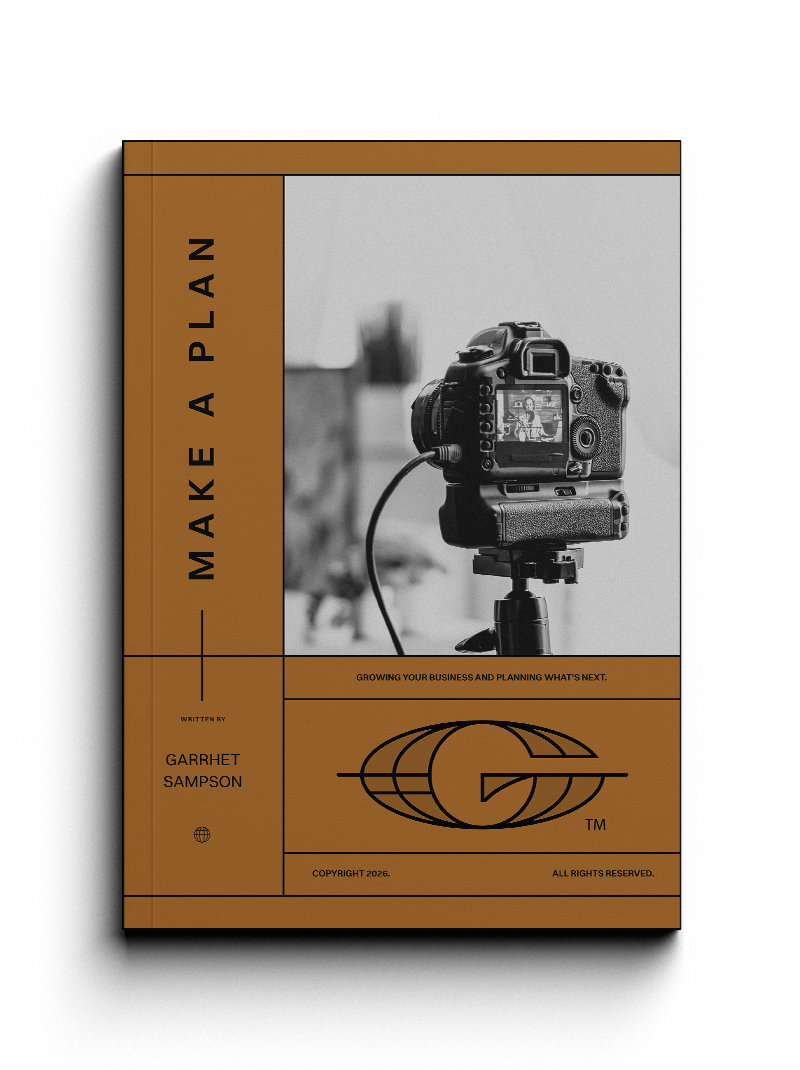
It was a Canon DSLR, not some elite piece of gear that would impress the internet. On the resale market, it probably would not have brought much. But in my hands, it represented something important. I could still make images. I could still serve clients. I could still tell stories. I could still take a skill I had developed and use it to create value for someone else.
That mattered.
When you are rebuilding, the things in your hands may look small from the outside. A camera. A laptop. A skill. A half-built website. A few clients. A notebook full of ideas. A little audience. A product you have not finished. A story you are still learning how to tell.
Do not despise small things just because they are not yet enough.
Small things become foundations when they are given structure.
A camera became client work. Client work became income. Income became a little more time. Time became space to learn. Learning became better offers, better systems, better products, and eventually a more sustainable way to build.
That did not happen all at once.
It happened because I stopped looking for one heroic solution and started asking what the next faithful piece of work could be.
Build Systems Before You Need Them Perfectly
In a heavy season, systems are not about productivity theater.
They are about mercy.
A good system keeps repeated work from depending entirely on your memory. It helps you move when your brain is tired. It gives client work, content, products, bills, files, and deadlines a place to live outside of your head. That matters because real life does not wait for perfect energy before making demands.
If you are a parent, you know this. A child does not pause his need for breakfast because you have a deadline. A baby does not care that the website copy needs another pass. School starts whether you slept or not. Rent is due whether your heart is healed or not. The car makes a weird sound at the exact moment your schedule cannot afford a weird sound.
This is why creative businesses need structure.
Not rigidity. Structure.
There is a difference.
Rigidity makes you serve the system. Structure helps the system serve the work. It gives the important pieces enough order that you can stay human inside the business.
For creators, that might look like a simple client workflow, a weekly planning rhythm, a repeatable editing process, a content idea bank, a product checklist, a folder structure that makes sense, or a basic financial review every week. None of those things are glamorous. Most of them will never be seen by your audience.
But they make the visible work possible.
They protect your attention so you can spend more time creating and less time buried in admin. They help you show up with more consistency. They make the business less dependent on crisis energy.
And if you are building inside a complicated life, that matters more than almost anything.
Do Not Build a Business That Requires You to Disappear
There is a version of creative ambition that asks too much.
It tells you to work harder, stay up later, say yes more often, post constantly, build faster, launch sooner, and treat exhaustion like proof that you are serious. Sometimes hard work is necessary. There are seasons where late nights are part of the cost. I know that intimately.
But I also know this: a creative business should not require you to disappear from the life you are trying to support.
For me, this became painfully clear through fatherhood. Every hour I worked was connected to two boys who had already lost enough. I needed to provide for them, but I also needed to be present with them. I needed to build something stable, but not at the cost of becoming emotionally absent. I did not want my sons to remember a father who was always working toward a future but never available in the present.
That tension shaped my business philosophy.
A better creative business should create pathways for stability, not just output. It should turn skills into offers, offers into income, income into margin, and margin into a life where the people you love actually get access to you.
That is one reason I care so much about systems, products, practical education, and repeatable workflows. They are not magic. They do not remove responsibility. But they help creative work become less fragile. They help the effort you put in today carry farther than one hour, one client, or one post.
That kind of structure gives your work somewhere to stand.
And it gives your life room to breathe.
Let the Hard Season Change Your Standards
A hard season will change what you value if you let it.
Before everything fell apart, I might have measured success differently. More visible wins. Better projects. More impressive income. The kind of creative life that looked good from a distance.
Afterward, the measurements became simpler and stronger.
Can I keep a roof over our heads? Can I build work that gives us options? Can I be present with my sons? Can I create income without living in constant emergency? Can I build something that still works when life gets heavy? Can I help other creators avoid some of the chaos I had to learn through?
Those questions still shape my work.
They are underneath the books, courses, editing tools, AI workflows, articles, and systems I build now. I am not interested in making resources that only sound good in theory. I care about tools for better creative work. Systems around the work. Stronger visuals. Clearer workflows. Practical education built for creators who need better output and better systems.
That language comes from lived need.
I needed those things first.
I needed clarity when life felt scattered. I needed systems when everything was too heavy to carry in my head. I needed creative work that could become stable enough to support a family. I needed tools that respected the fact that real life is rarely clean, calm, or perfectly scheduled.
That is the kind of business I believe in now.
Build From What Is True
A creative business that can hold real life has to be built from truth.
Not the online version of your life. Not the fantasy version of your schedule. Not the imaginary version of your energy. The truth.
How much time do you actually have? What responsibilities are not going away? What work is already creating value? What keeps breaking? What needs to be simplified? What kind of income does your life require? What needs a system? What needs to be released? What kind of creator are you becoming through all of this?
Those questions may feel heavy, but they are also freeing.
You cannot build a stable business around a pretend life.
For me, the truth was that my life had changed completely. I was a single father. I had two boys depending on me. I had creative skills, a camera, some client experience, and a refusal to accept the future being handed to us. That was not everything I wanted.
But it was enough to begin.
You may not be rebuilding from the same kind of circumstances, but every creator eventually faces the same deeper question: will your work support the life you are actually living, or will it quietly ask you to abandon that life in order to keep the work alive?
Build the kind of business that answers carefully.
Build something honest.
Build something useful.
Build something with structure strong enough to carry more than your ambition.
A creative business that can hold real life does not happen by accident. It is built through small, faithful decisions. Clearer offers. Better systems. Stronger workflows. More honest priorities. Less dependence on panic. More attention to what the work is actually for.
For me, it started with two boys, a camera, and the grace of God meeting us in the ruins of a life I did not choose.
That was enough to start building.
And sometimes enough to start is the mercy you need most.