

The night does not need to be rescued from itself
Astrophotography editing can go wrong quickly because the night sky gives photographers permission to push everything.
More clarity. More contrast. More saturation. More blue. More purple. More stars. More glow. More drama. More proof that the camera saw something incredible. Before long, the image no longer feels like standing under a real sky. It feels like the night was processed through a video game loading screen.
The best night images do not lose the quiet.
They can be detailed and dramatic, but they still need atmosphere. They need darkness. They need enough restraint that the viewer can feel the cold air, the slow exposure, the silence between the trees, the way the stars seemed to sit just beyond reach.
A good astrophotography edit should reveal what the camera captured without stripping away the mystery that made the moment worth photographing.
That balance is the craft.
A rooftop tent under Montana stars
One night that stays with me is taking my boys camping under a clear Montana sky.
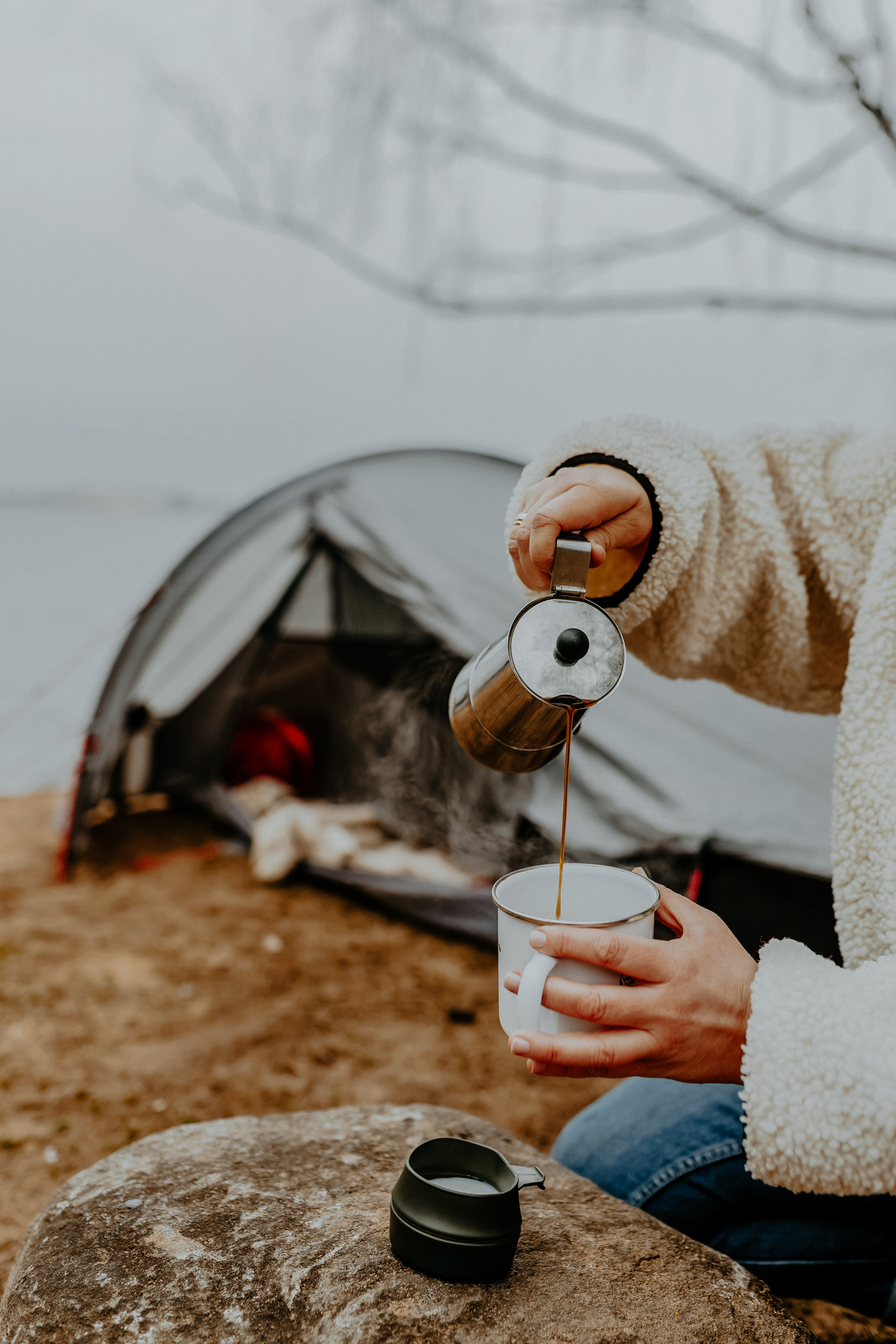
It was our first time using the rooftop tent. There is a particular kind of excitement that comes with new camping gear, especially when kids are involved. Everything is a little clumsy, a little magical, and slightly more complicated than the product photos suggested. Zippers sound louder in the dark. Sleeping bags become negotiations. The air cools faster than you expect.
Then the sky opens.
Montana at night can make you feel very small in the best possible way. The stars do not politely decorate the background. They crowd the sky. They make the darkness feel alive. Standing there with my boys, looking up from camp, I was reminded that the night does not need much help being beautiful.
That is a good lesson for editing.
The goal is not to overpower the memory. The goal is to bring people close enough to feel why you stopped and looked up in the first place.
Start with a clean foundation
Astrophotography begins before Lightroom.
Your edit will always be limited by the capture. If the image is badly underexposed, out of focus, full of motion blur, or buried in noise, editing can improve it but not fully save it. Night images reward preparation: stable tripod, careful focus, appropriate shutter speed, enough ISO, and attention to foreground composition.
Once you are editing, start with the foundation.
Correct the exposure enough to see what is there, but do not flatten the night. Adjust white balance carefully. Night skies can swing too blue or too purple quickly, especially if you are trying to create drama. Look for a color temperature that feels natural to the scene, not just exciting on screen.
Then handle contrast with patience.
The temptation is to crush the blacks and lift the stars until the image has maximum impact. But the night needs tonal range. Shadows should hold depth. The sky should separate from the foreground. The stars should be present without turning into glitter spilled across a black tablecloth.
Protect darkness
Darkness is not a flaw in a night image.
It is part of the subject.
Many photographers edit astrophotography as if the goal is to make the night as visible as day. They lift shadows aggressively, brighten the foreground, sharpen every detail, and push color until the scene becomes too exposed emotionally as well as technically.
But a good night photograph should still feel like night.
That means some parts of the frame can stay quiet. The foreground does not need to reveal every rock, branch, tent zipper, and suspicious snack wrapper. The sky does not need to show every possible star. The viewer should sense the darkness around the scene.
Protecting darkness gives the image mood.
It also gives the stars somewhere to live.
Handle color with restraint
Night color is delicate.
The Milky Way may carry subtle warmth and magenta. The sky may lean blue. Light pollution may add orange or green. The foreground may pick up color from a headlamp, campfire, moonlight, or nearby town. If you push global saturation too hard, those colors can become unnatural fast.
Instead of asking, "How colorful can I make this?" ask, "What color was actually present, and what does the image need to feel alive?"
Use vibrance and saturation carefully. Consider targeted adjustments instead of global ones. Keep an eye on the transition between the horizon and the sky. Watch for strange color banding or halos around trees, mountains, or tents.
A strong astrophotography preset can help create a base treatment, but it should not force the sky into an artificial palette. The best edits often feel rich without looking loud.
Do not let clarity ruin the atmosphere
Clarity, texture, dehaze, and sharpening can help night images, but they can also damage them.
Too much clarity can make the sky brittle. Too much dehaze can create harsh contrast and unnatural color. Too much sharpening can exaggerate noise until the image feels crunchy. The stars may appear stronger, but the atmosphere gets punished.
Use these tools like seasoning, not a personality replacement.
Apply enough structure to define the stars and bring separation to the sky. Then stop before the image begins to look overworked. If you need stronger separation, consider local adjustments that affect only the sky or foreground instead of dragging the entire image into the same treatment.
Night images usually benefit from finesse.
They do not need to be beaten into drama.
Give the foreground a reason to exist
A sky full of stars is beautiful, but the foreground gives the viewer somewhere to stand.
A tent, a tree line, a mountain ridge, a road, a cabin, a person with a headlamp, or the quiet shape of a campsite can turn a sky image into a story. Without that anchor, the photo may be technically impressive but emotionally distant.
When editing, think about the relationship between sky and foreground.
Does the foreground support the scale of the sky? Does it create a sense of place? Does it need a slight lift so the viewer can understand it, or does it work better as a silhouette? Is there a distracting light source pulling attention away from the stars? Does the composition feel grounded?
Editing is not only about making the night sky visible.
It is about preserving the experience of being there.
Keep the image believable
The line between enhanced and unbelievable is easy to cross in astrophotography.
Some viewers may not know exactly what is wrong, but they can feel it. The sky is too clean. The stars are too sharp. The colors are too intense. The foreground is too bright. The whole image feels like it is trying too hard to prove itself.
A believable edit does not mean boring.
It means the image still carries the truth of the night. It lets the viewer enter the scene without being distracted by the processing. It respects the fact that the night sky already has its own authority.
That is especially important if you are building a recognizable editing style. Your night images should not feel like they belong to a completely different photographer. They can be darker, more dramatic, and more specialized, but they should still share some visual DNA with the rest of your work.
Let wonder stay in the frame
Astrophotography is technical, but it is not only technical.
It is also about wonder.
It is about standing outside when the world has gone quiet, looking up at a sky that makes your daily worries feel both smaller and strangely held. It is about the patience of long exposures, the cold in your fingers, the shuffle of kids in a rooftop tent, the glow of a headlamp, the first image appearing on the back of the camera and proving that the stars were there all along.
Edit for that.
Use the tools. Strengthen the sky. Reduce noise. Shape contrast. Protect color. Build mood.
But do not edit the life out of the night.
The best astrophotography does not shout, "Look what I did in Lightroom."
It invites the viewer to look up.