

Why I Don’t Romanticize Hustle Anymore
I used to be proud of how much I could carry.
Late nights. Early mornings. Client work after bedtime. Design files open while the house went quiet. Another invoice sent. Another edit finished. Another project pulled across the line by sheer force of will and whatever caffeine was still left in my system.
For a long time, that looked like strength to me.
Sometimes it was. There are seasons when you do what the season requires. You work after everyone else sleeps because there are mouths to feed, bills to pay, and no magical rescue coming through the front door with a casserole and a business plan. I know what it means to work hard because there was not another option.
But I do not romanticize hustle anymore.
There is a version of hustle that sounds noble from a distance and feels like erosion up close. It asks for your evenings, then your mornings, then your weekends, then the small quiet parts of your heart you thought would be safe. It convinces you that if you can just keep moving, eventually the pressure will release.
Sometimes the pressure does not release.
Sometimes it trains you to live braced.
The Question That Changed the Measurement
One moment still lives in me.
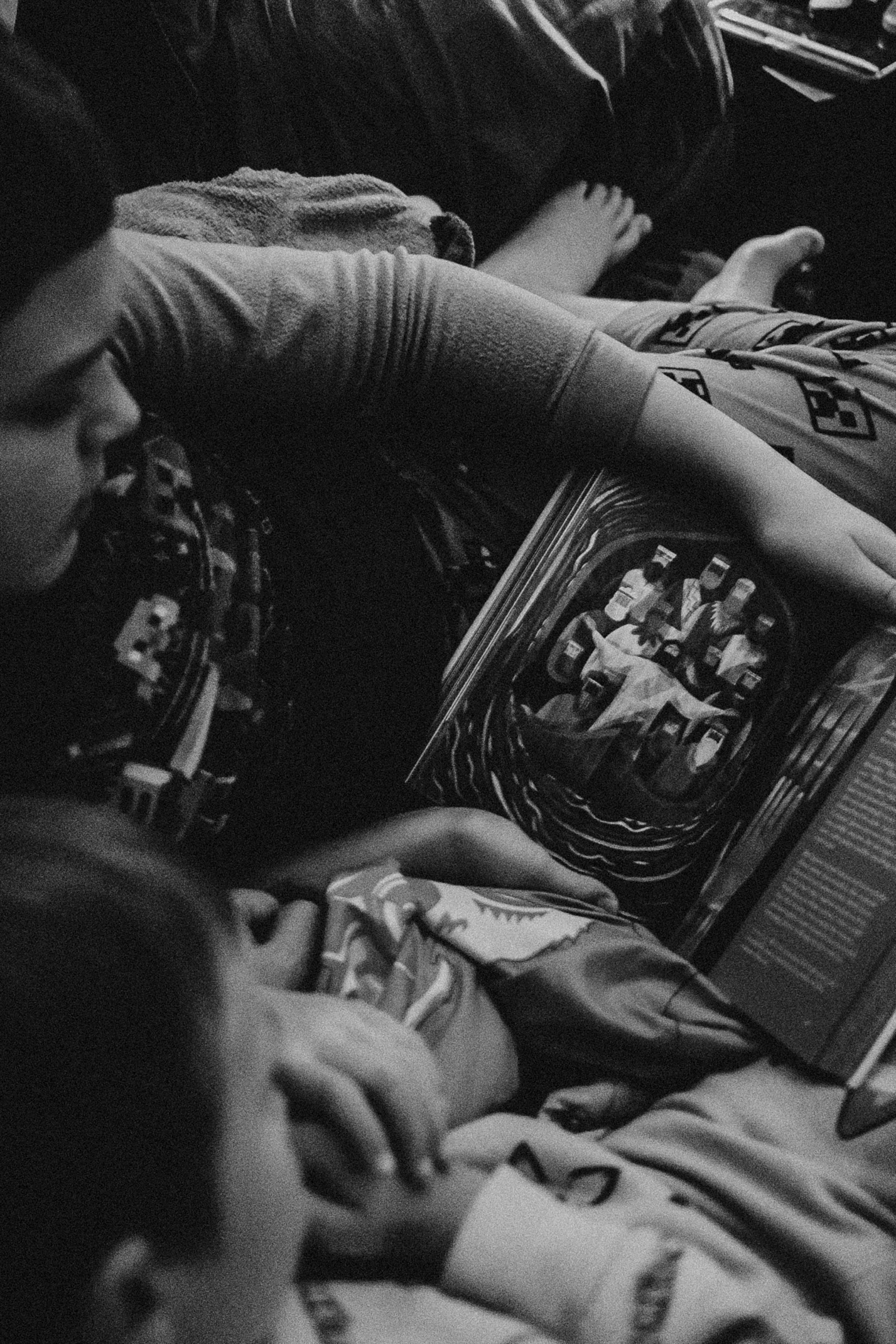
My oldest was five. He looked at me with the open face children have before they learn to protect every feeling, and he asked me to play LEGOs “like we used to.”
Like we used to.
Before our family changed, I had been home during the day. We were always together. Lessons at the table. Toys on the floor. Snacks. Questions. The strange logic of a five-year-old explaining why a spaceship also needed wheels, a jail cell, and possibly a dragon. We had time then, even in the instability.
Now he was in kindergarten. He was navigating a new family rhythm. I was juggling school, work, client projects, legal realities, bills, and the thousand sharp pieces of a life that had come apart.
And there he was, asking for the version of me he remembered.
The dad who had time to sit on the floor.
The dad who was not always half-listening while calculating what still needed to be done.
The dad who could build towers, spaceships, and little plastic battle scenes without checking the clock.
I remember the bright colors scattered across the floor. Red bricks. Blue plates. Tiny wheels. One of those impossible little flat pieces that always disappears when you need it. I remember feeling the cost of every hour in a way I had not felt before.
The work mattered. Provision mattered.
But so did presence.
Hard Work Was Not the Problem
I want to be clear: hard work was not the enemy.
I still believe in discipline. I believe in showing up. I believe in the quiet faithfulness of doing the next thing when nobody is clapping. I believe in the dignity of work, the formation of repetition, and the simple fact that many good things are not built by people who quit the moment the work becomes inconvenient.
Hard work helped save us.
Late nights mattered. Client work mattered. School mattered. Photography mattered. Writing mattered. Learning new skills mattered. There were seasons where the work had to stretch because life had narrowed the options.
What changed was the story I told myself about work.
Before, I could wear exhaustion like evidence. If I was tired, it meant I was trying. If I was busy, it meant I was valuable. If I was constantly solving problems, it meant I was needed. If I could survive one more crisis, deadline, repair, or practical emergency, maybe I was doing what a good man does.
But survival mode is not a personality.
And exhaustion is not proof of calling.
The problem with romanticizing hustle is that it turns depletion into virtue. It teaches you to admire the pace that may be stealing your presence, health, joy, and the quiet attention your family needs more than your productivity.
The Business Had to Become More Than Late Nights
I built much of my early career on late nights.
That was the only way I knew how to do it. When the house was quiet, I opened the laptop. When the boys were asleep, I edited. When the day had already taken the best of me, I gave the remaining pieces to the work because the work mattered.
It was provision.
It was possibility.
It was the road out.
But late nights are useful for a sprint. They are terrible as a foundation.
A business built only on your ability to grind eventually becomes a threat to the life it is supposed to support. It asks you to trade presence for progress. It makes rest feel irresponsible. It turns children into interruptions. It makes every quiet moment feel like an opportunity you are wasting.
I could not let that become our normal.
The business needed systems. Products. Clearer offers. Better workflows. Work that could compound. Assets that could serve people after I made them. A schedule that did not require me to be constantly available to everyone except the boys who needed me most.
This is where my view of creative business matured.
I no longer wanted to build something that survived only on my effort. I wanted to build something that carried effort forward.
Presence Became the New Ambition
When I think about ambition now, I think about presence.
That may sound smaller than the way ambition is usually sold, but it feels much more demanding. It is one thing to chase visible success. It is another to build a life where the people you love can actually feel you in the room.
Presence requires more than time.
You can be physically home and still emotionally unavailable. You can sit on the floor while your mind runs through invoices, content ideas, repairs, and emails. You can nod at a story and miss the whole thing because some anxious part of you is trying to keep disaster from catching up.
I did not want that to be the father my sons remembered.
I wanted them to know I fought for a future. I also wanted them to know I saw them while I was fighting for it.
That meant the business had to serve a better definition of success. Money mattered, but not at any cost. Growth mattered, but not if it required me to disappear. Creative work mattered, but not if it slowly replaced the family it was supposed to protect.
Presence became the test.
Does this opportunity support the life I am building, or does it only keep me busy?
Does this project create stability, or does it drain the energy I need for what matters most?
Those questions helped me say no. They helped me build systems. They helped me understand that I did not have to choose between responsibility and presence, but I did have to build differently if I wanted both.
Build Something That Gives You Back
I still work hard.
That has not changed. If anything, I work with more intention now because I understand the stakes better. I write. I build. I create. I edit. I make tools and resources for creators trying to build more sustainable lives around the work they love.
But I do not want my children to grow up believing the highest form of manhood is constant exhaustion.
I do not want them to confuse provision with absence.
I do not want them to inherit a life where love is proven only by sacrifice so total that no one gets the actual person behind it.
Work matters. Sacrifice matters. Provision matters.
So does delight.
So does rest.
So does the small, inefficient, unscalable beauty of a father saying yes when his son asks him to play.
If you are building in a hard season, pay attention to what your work is costing. Not so you can avoid responsibility, but so you can build with truth. Tell the truth about the hours, your body, your children, your health, your faith, and your joy. Tell the truth about whether the business is giving life back to the people it is supposed to support.
Then build accordingly.
Build systems around the work. Build assets that carry effort forward. Build offers that do not require endless custom explanation. Build rhythms that make room for your actual life.
There will still be late nights.
But let them lead somewhere.
Let the work become a bridge, not a prison.
I built my career on hard work, and I am grateful for what that work made possible. But I am building the next chapter around something deeper than hustle: a life where my sons can ask me to play, and more often than not, I can say yes.