
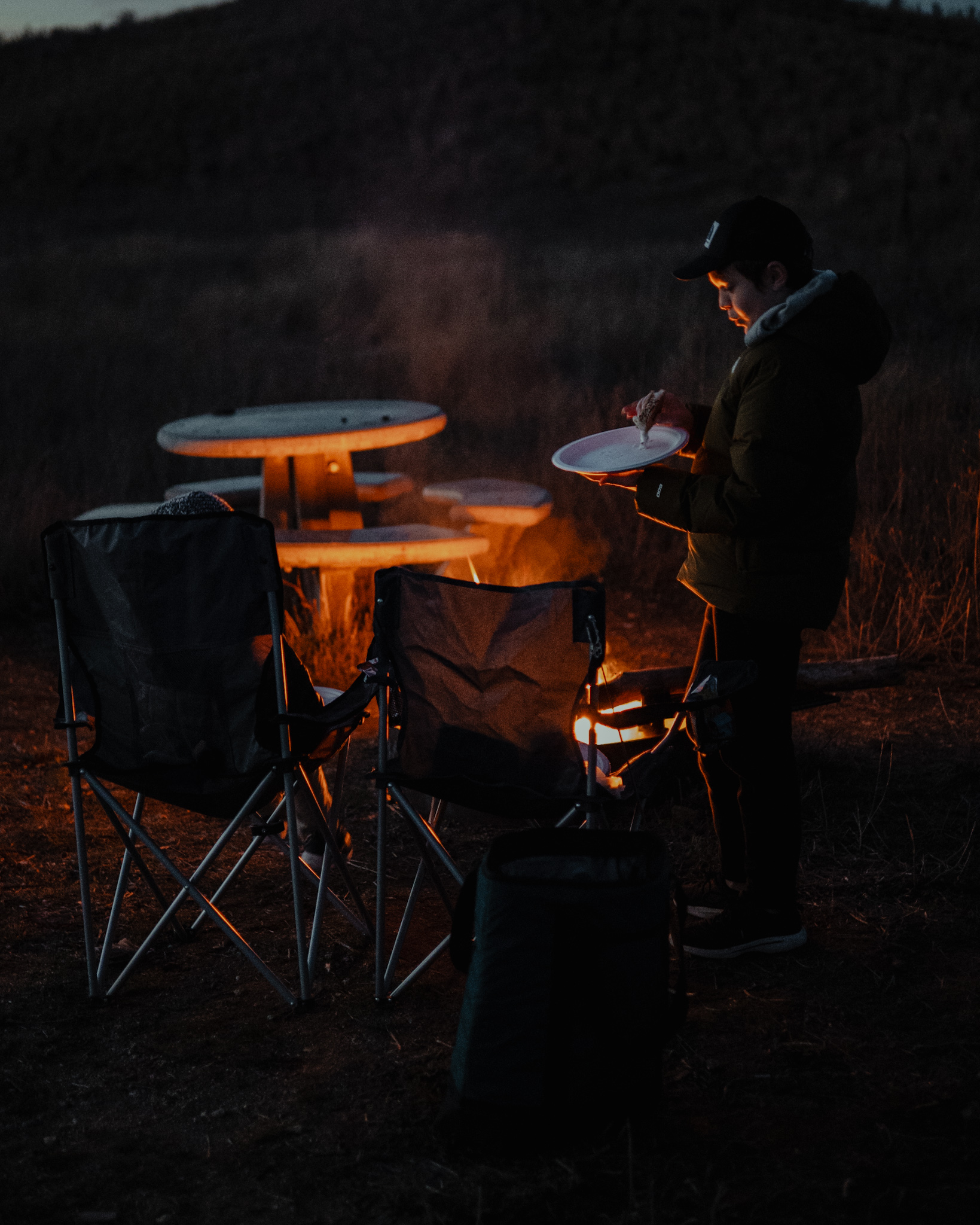

Why Presence Became the Real Measure of Success
The first real gift I bought myself in that season was a camera.
Not just any camera. A Canon EOS R. The kind of purchase that felt wildly significant because it was not only a piece of gear. It was a statement. We had made it through months of instability, Christmas, school, work, court realities, and the strange early stretch of the pandemic. Tax returns and stimulus money had arrived, and after taking care of my boys, I let myself buy something that felt like a door opening.
The Canon EOS R was the first in its line to offer professional 4K video capabilities, and at the time, the internet was alive with camera creators, filmmakers, and vloggers making the world feel both smaller and more possible. I had fallen in love with Casey Neistat’s energy, Peter McKinnon’s style, and the whole wave of people making films out of ordinary life.
I was not only buying a camera.
I was buying a way to see again.
The Boys in the Back Seat
Montana had a relaxed view of quarantine compared to many places. Winter turned to spring, and the phrase “fourteen days to slow the spread” had somehow stretched into a year of political noise, social tension, and everyone pretending they knew what week it was.
But with that camera, a new zoom lens, and two boys in the back seat, our days started changing.
We drove into the mountains.
The roads bumped beneath us. The boys jabbered from their seats, inventing ideas for our family, pointing at trees, asking questions, arguing about things only children understand with any seriousness. The windows framed pine ridges, open sky, dirt roads, and the kind of Montana light that makes you understand why people keep trying to photograph it even though it refuses to be fully captured.
Photography became a family pastime.
The camera gave us a reason to go outside. It gave us a reason to drive, explore, stop, look, and let the day become something more than survival. I could pull over for a landscape, a patch of light, a ridge line, a road disappearing into the trees. The boys watched me watch the world.
Then they started watching too.
That mattered.
The Photo That Opened a Door
My love for photography had started earlier because of one particular image that went wildly viral.
At the time, I was designing websites and getting tired of paying twenty dollars every time I needed a stock photo. Eventually, we bought the Canon 6D Mark II because I wanted to create images for client work instead of constantly buying them. The camera was practical at first. A tool. A way to save money. A way to serve clients better.
Then one photograph caught fire.
Millions of views. Attention I did not expect. A new possibility I had not fully considered. Suddenly photography was not only a support skill for design and web work. It was an avenue for storytelling, content creation, and creative identity.
That dream had gone quiet for a while under the weight of needing stability.
The EOS R brought it back.
There is something powerful about picking up a tool you once loved and realizing it can still take you somewhere. The camera did not erase what happened. It did not solve every practical problem. But it gave me a way to connect work, fatherhood, beauty, and possibility in the same frame.
Presence Is Different From Proximity
Before that season, I had been around my sons a lot. I had been the stay-at-home dad, homeschooling my oldest and caring for our youngest. We had spent ordinary days together in the way that becomes normal until it is disrupted.
After everything changed, time with them became more precious.
Not because I loved them more, but because the shape of our life made every hour feel more visible. School. Work. Client projects. Parenting schedules. Court realities. The demands of rebuilding. All of it made me understand that being near my children was not the same as being present with them.
Presence asks for attention.
It asks you to put the phone down. To stop mentally revising an email while your child is telling a story. To notice the light in the back seat. To hear the laughter. To pull over because the mountain looks beautiful and the day is asking for a memory.
The camera helped me practice that.
It sounds strange because cameras can also become a way to hide behind a lens. But for me, it often did the opposite. It made me slow down. It made me pay attention. It made the drive itself matter.
Success Needed a Better Definition
I used to think about success mostly in terms of accomplishment.
The job. The income. The project. The recognition. The client. The portfolio. The kind of visible progress that makes a life look like it is moving upward.
Those things still matter. I am not pretending income is irrelevant or that recognition has no place. A creator needs to build work that can support life, and that means taking money, strategy, and visibility seriously.
But fatherhood changed the measurement.
A business that gives you income but steals your presence is not fully successful.
A creative life that looks impressive online but leaves your children with the leftovers of your attention is not the kind of life I want to build.
A career that requires constant absence from the people it claims to support needs to be questioned.
Driving through the mountains with my sons, camera in the passenger seat, I began to understand that success had to include the ability to say yes to moments that did not scale.
The road. The light. The back-seat laughter. The stop at the overlook. The image that only mattered because we were there together.
Build Work That Returns You to Life
This is the standard I keep returning to now: the work should return you to life.
Not every hour. Not every season. There are times when work asks more from you. There are deadlines, launches, client demands, and stretches where the calendar feels heavier than you want. But over time, the work you build should give something back.
More room. More clarity. More capacity. More stability. More ability to be present.
That is why systems matter. That is why products matter. That is why I care about tools for better creative work and stronger workflows. If the business can hold more weight without requiring your constant emergency response, you get more of yourself back for the people and places that matter.
The camera taught me that in a way no spreadsheet could.
It reminded me that creative work is not only about output. It is about attention. It is about what you notice, what you preserve, and what you choose to give your focus to.
The Promise I Made on the Road
Seeing the glow in my boys’ eyes as we bumped along those roads, I made a quiet promise to myself.
We would do this more often.
Not someday after everything was perfect. Not after the business was fully built, the bank account was comfortable, and the calendar was clean. We would do it in the middle of rebuilding. We would make room for beauty while life was still being repaired.
That mattered because joy cannot always wait until after stability arrives.
Sometimes joy helps build stability.
Those mountain drives became part of our way forward. The camera became a tool for memory, exploration, work, and presence. My sons saw me making images, but more than that, they saw me paying attention to the world with wonder.
That is something I hope they carry.
The Measure I Trust Now
Today, I still care about building meaningful work.
I care about products, articles, tools, education, visuals, and systems. I care about helping creators build with more clarity and create stronger work. I care about business because business can become a structure that supports a life.
But I do not trust success if it pulls me away from the people I love without returning something better.
Presence is the measure now.
Can I build work that supports my sons and lets me be with them? Can I create resources that help other creators while preserving the life I am trying to live? Can I grow without disappearing? Can I carry ambition and fatherhood in the same hands?
The answer is not always simple.
But I know the direction.
A camera, two boys, and the Montana hills helped teach it to me.








.jpg)


.jpg)