
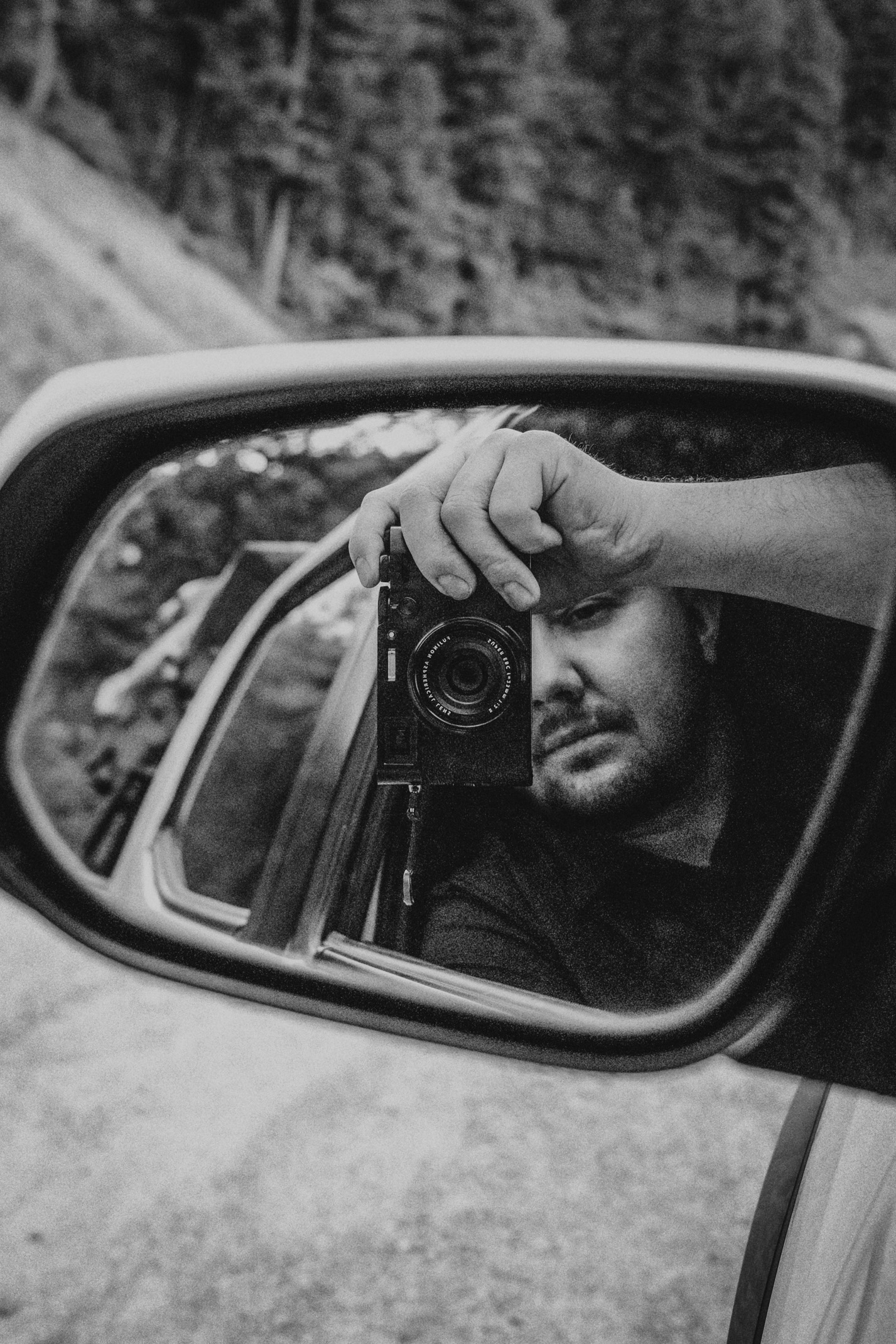

Why the Camera Became a Way Forward
I owe so much of what is good in my life to the grace of God and picking up a camera.
That may sound dramatic, but I mean it plainly. The camera became practical before it became poetic. It helped me make money. It helped me serve clients. It helped me build a portfolio, meet people, create visual work, and tell the story of a life that was being rebuilt one small piece at a time.
But it also became something more personal.
It became a way forward.
Before photography became part of my work in a serious way, I had always loved design and creative disciplines. Web design, app design, branding, visual systems — those became ways to pay bills and solve problems. I enjoyed them. I was good at them. But photography felt different.
Photography felt like it belonged to me.
It gave me an outlet that was not only about client needs, deadlines, or the practical demands of survival. It gave me a way to go outside, notice light, capture memory, and share the life we were building after a season that had taken more from us than I knew how to say at the time.
Photography Makes You Notice
One of the quiet gifts of a camera is that it trains attention.
You begin to see things you might have walked past. The way afternoon light falls across a face. The shape of a mountain road. The color of spring grass after rain. A child’s expression before he realizes you are looking. The small human details that make a season feel real instead of only difficult.
When life is heavy, attention often narrows around problems.
Bills. Deadlines. Court dates. Schedule changes. School. Work. The next task. The next need. The next repair. The next thing that might go wrong.
The camera interrupted that.
It asked me to look for what was still beautiful.
That is not denial. It is not pretending life is easier than it is. Beauty does not erase pain, but it does give pain proportion. It reminds you that the world still contains gifts, even when your own story feels fractured.
Photography became one of the ways I practiced noticing what remained good.
A Gateway Into Story
Every image became a way to tell the story of our family and the life we were building.
Some photographs were client work. Some were landscapes. Some were little moments with the boys. Some were experiments as I learned editing, color, and visual consistency. But together, they gave me a way to collect moments that felt like they were moving too quickly.
That mattered as a father.
Children grow inside the blur of ordinary days. One minute you are warming a bottle, and the next they are telling long stories with action figures, asking questions about the world, or developing opinions about snacks with the seriousness of a Supreme Court ruling.
Photography gave me a way to keep some of it.
Not perfectly. No camera can hold the whole thing. But a photograph can become an anchor. A reminder. A piece of evidence that life was still happening, still worth seeing, still full of small graces in the middle of rebuilding.
The Camera Helped Me Meet People
Photography also became a way of entering community again.
That part surprised me.
When your life changes dramatically, social connection can become complicated. You may not fit the old rooms the same way. People may not know what to say. You may carry a story that feels too heavy for casual conversation and too private for strangers.
A camera gave me a bridge.
I could introduce myself through the work. I could meet people on campus through shared creative interests. I could offer to take photos, help with projects, create images, and serve people through something useful. The camera gave me a reason to be in the room that did not require me to explain my whole life before I belonged there.
That is one of the understated powers of creative work.
It gives us ways to connect before we have all the language for ourselves.
You can make something. Share something. Help someone. Create a reason for conversation. Let the work open a door.
For me, photography opened several.
Craft Restores Agency
A hard season can make you feel like life is happening to you.
Decisions get made. Circumstances shift. People leave. Systems respond slowly. Bills arrive quickly. Children need care immediately. You spend so much time reacting that your own agency can feel buried under everyone else’s consequences.
Craft helps restore agency.
With a camera, I could make decisions. Lens choice. Angle. Composition. Timing. Light. Exposure. Editing direction. Color. Contrast. Story. None of those decisions fixed my life in a grand sense, but they reminded me that I could still choose and shape and create.
That is no small thing.
When you complete creative work, you make a promise to yourself and keep it. You begin with raw material and turn it into something finished. You look at a problem and solve it with your hands, eye, and judgment.
Little by little, that restores trust.
Not because every image is great. It will not be. Some photos are bad, and that is a necessary sacrifice to the gods of practice. But the act of making keeps your creative muscles alive.
Editing Became a Language
As my love for photography grew, so did my love for editing.
Editing taught me that an image is not only captured. It is interpreted. Color, contrast, warmth, shadow, grain, and tone all shape how the viewer feels. A photograph can preserve a moment, but editing helps decide the emotional language of that memory.
That fascinated me.
I wanted my images to feel aligned with the life I was building and the message I wanted to carry into the world. I did not want every photo to feel like a separate experiment. I wanted a through line. A recognizable way of seeing.
That desire eventually shaped my work with presets, LUTs, and visual tools. But before it became a product direction, it was personal. I was learning how to make the images feel like the world I was trying to show.
Photography was not just documentation.
It was translation.
What Creators Can Learn From Picking Up the Tool
Every creator has a tool that becomes more than a tool.
A camera. A pen. A microphone. A sketchbook. A keyboard. A brush. A laptop. A guitar. A notebook full of sentences that do not yet know what they are becoming.
The tool matters because it gives your inner life a way to move outward. It turns attention into form. It helps you meet people, tell stories, solve problems, make income, and build identity through repeated action.
If you feel stuck, sometimes the best thing you can do is pick up the tool again.
Not to make a masterpiece.
To return to practice.
Take the photo. Write the paragraph. Edit the clip. Sketch the idea. Build the page. Make something small enough to finish and honest enough to matter.
The work may become practical later. It may become a business, a product, a service, a portfolio, a book, a course, or a new path. But first, it has to become a way back into motion.
That is what the camera did for me.
It helped me move forward when the future felt unclear.
It gave me a way to see, serve, remember, connect, and create.
And in a season when so much felt lost, that was more than enough reason to keep picking it up.
The Camera Gave Me Proof
The camera also gave me proof that the world still held moments worth preserving.
That mattered more than I knew at the time. When life has become a series of problems to solve, it is easy to start seeing everything as pressure. The camera interrupted that. It forced me to slow down enough to notice my boys in the back seat, the way light hit the mountains, the texture of an old road, the small dignity of ordinary things.
That act of noticing became healing.
It reminded me that the story was not only loss. There was still beauty in front of me, and I had a way to hold it without having to explain it perfectly.
That is one reason I still believe visual craft matters. A photograph is not only content. Sometimes it is a marker in the road that says, “We were here, and there was light here too.”







.jpg)


