
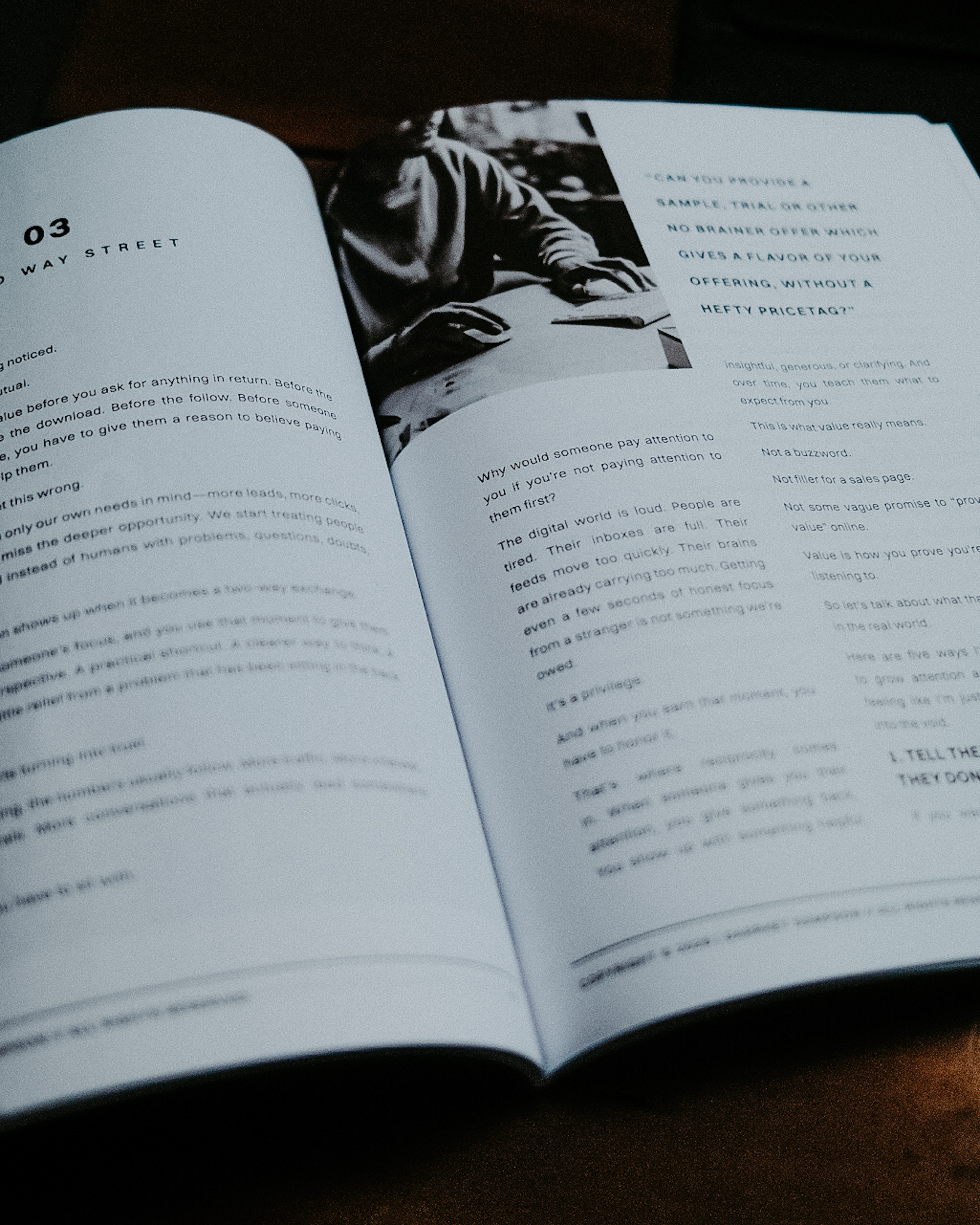

How to Create Content When You Don’t Feel Like Performing
I have never wanted to be an internet personality.
I would rather be behind a camera than performing for one. I like making the thing, studying the light, building the product, writing the lesson, talking to real people, and doing the work. I do not wake up excited to turn my whole day into content or narrate breakfast like it has a three-act structure.
That creates tension, because visibility matters. If people cannot find your work, they cannot hire you, buy from you, learn from you, or refer you. Creative work needs pathways into the world. But for a lot of creators, the current expectation of online content feels exhausting. It can feel like you are being asked to become louder, faster, funnier, more available, more personal, more polished, and somehow more casual all at once.
That is a strange assignment.
The shift that helped me was treating content more like teaching than performing. Teaching starts with usefulness. What are you learning? What questions do people ask you? What problem keeps showing up? What did you notice in the work this week? What mistake can you help someone avoid? What process can you explain? What story gives language to something your audience already feels?
That kind of content is more sustainable because it comes from experience, not from pretending to be a character every day.
Separate Visibility From Performance
Visibility and performance are not the same thing.
Visibility means the right people can discover, understand, and remember your work. Performance means you feel pressure to entertain, exaggerate, provoke, or constantly package yourself for attention. Some creators genuinely enjoy a performative style, and that is fine. Personality can be a real strength. But not every creator is built to live online like a daily show.
If performance drains you, do not assume that means you are bad at content. You may need a different content posture.
A photographer can create content by showing how an edit came together, explaining what made a shoot work, or sharing a lesson from a client project. A designer can break down positioning, visual choices, or common website mistakes. A writer can explain ideas, frameworks, or behind-the-scenes decisions. A creative educator can turn recurring questions into useful articles, emails, or videos.
None of that requires you to become fake. It requires you to pay attention to the work and translate what you are learning.
Make the Work the Main Character
When content feels exhausting, it is often because the creator thinks they have to make themselves the main character all the time.
You can show up without making every piece of content about you.
Show the work. Show the process. Show the problem. Show the before-and-after. Show the decision. Show what changed when the message got clearer, the edit got stronger, the workflow got simpler, or the offer got easier to explain.
This is especially helpful for creators who would rather be making than performing. You still bring your voice and perspective, but the work carries the center of gravity. Your experience gives the content authority. Your taste gives it personality. Your stories give it texture. But you are not constantly trying to manufacture a version of yourself for the feed.
That kind of content builds trust because it feels grounded.
People learn how you think. They see how you solve problems. They understand what you care about. Over time, they start connecting your name with a certain kind of help.
That is visibility with substance.
Answer the Questions People Already Ask
One of the easiest ways to create content without performing is to answer real questions.
What do clients ask before hiring you? What do customers ask before buying? What do other creators ask in DMs, comments, emails, or conversations? What questions come up every time you explain your work?
Those questions are gifts.
They tell you where people are confused, curious, stuck, or ready to move. They also give your content a built-in reason to exist. Instead of inventing a clever post because the algorithm demands a sacrifice, you are helping someone solve a real problem.
If photographers keep asking how to make edits more consistent, write about that. If creators keep asking how to price work without apologizing, explain it. If clients keep asking what makes a brand shoot valuable, answer it clearly. If people keep wondering how to choose the right preset pack, teach them what to look for.
Useful content does not need to be loud to be effective. It needs to meet a real need.
Build From Notes, Not Panic
Content becomes much easier when you collect ideas before you need them.
Panic content usually feels thin. You sit down because you need to post, not because you have something ready to say. The blank page starts giving you attitude. You scroll for inspiration and accidentally compare your rough thought to someone else’s finished performance. Now you are not just stuck; you are mildly annoyed at a stranger with good lighting.
A better approach is to keep notes.
Capture lines from client conversations. Save questions. Write down observations from shoots, edits, product builds, books, mistakes, and conversations with your kids. Keep track of the phrases you find yourself saying repeatedly. Those are often the beginnings of your strongest content because they come from lived work.
Then when it is time to publish, you are not creating from nothing. You are shaping something that has already been gathered. That rhythm makes content feel less like performance and more like stewardship.
Choose Formats That Fit Your Energy
Not every creator needs to use every platform the same way.
Some people are excellent on short video. Some write better articles. Some teach well through email. Some are natural on podcasts. Some are strong on visual platforms because their work is visual. Some need long-form content as a home base and short-form content as distribution.
Choose formats that fit your energy and the kind of work you make.
If you hate filming yourself every day, do not build a strategy that requires daily personal performance. If your ideas need room, write articles, newsletters, scripts, or long captions. If your work is visual, create process breakdowns, edits, field notes, before-and-afters, and image-led stories. If you enjoy conversation, use interviews or audio.
A sustainable content system should not require you to betray your nature every morning.
It should stretch you, yes. It should help you communicate more clearly. But it should not turn your entire creative life into a performance you resent.
Let Teaching Build Trust
Teaching content compounds because it gives people something they can use.
A helpful article can be found later. A strong tutorial can be shared. A practical framework can help someone make a decision. A clear explanation can become the reason a future customer trusts your product, course, service, or point of view.
This is why teaching is such a strong alternative to performance. You are not chasing attention for its own sake. You are building trust through usefulness.
That does not mean the content should be dry. Bring your humor. Tell the story. Show the weird detail. Let the reader feel the real person behind the advice. But make sure the piece gives them something they can carry back into their work.
That is the balance.
Create content that feels like a working creator explaining what they have learned to another capable creator who is trying to build with more clarity.
Show Up Without Becoming a Character
You do not have to become an internet personality to build visibility.
You can teach. You can document. You can explain. You can show the work. You can share honest lessons from real projects. You can build a library of useful content that helps people discover you because you answer questions they already have.
That kind of content may not always create the loudest moment. It may not give you the quick thrill of a viral post. But it builds something steadier.
It builds recognition. It builds trust. It builds language around the work you want to be known for.
If performing drains you, stop trying to win at someone else’s version of content. Find the form that lets your actual experience become useful to the people you want to serve.
Then keep showing up there.
Not as a character. As a creator with something real to teach.
Over time, that approach also makes the content easier to repurpose. A useful lesson can become an article, email, short video, or product note because the idea has substance underneath it.



.jpg)