

Learning to Trust Your Creative Work Again
The paperwork had barely settled before the world shut down.
Only days after our parenting plan was signed, the pandemic arrived with the kind of force that made everyone’s private crisis suddenly feel public. Classrooms closed. Churches emptied. Grocery shelves looked strange and picked over. New phrases entered everyday language with the blunt force of a weather warning.
For most people, it was the beginning of uncertainty.
For me, uncertainty had already moved in months before and left its shoes by the door.
My life had already changed. I was a single father navigating school, court realities, student housing, benefits, client work, and two boys who needed more stability than the world seemed willing to offer. I was tired in places sleep did not reach.
Then everything stopped.
And strangely, in the middle of a world gone mad, we received shelter.
When the World Slowed Down
I do not want to romanticize the pandemic. It brought loss, fear, loneliness, and upheaval to countless people. But in our particular corner of the world, the shutdown created something I desperately needed.
Margin.
Classes moved online. Student housing enacted a rent freeze. Benefits moved into extended renewal. The church down the street suddenly needed help bringing ministry online, and my background in church communications, design, video, and web work became useful again.
My boys came home.
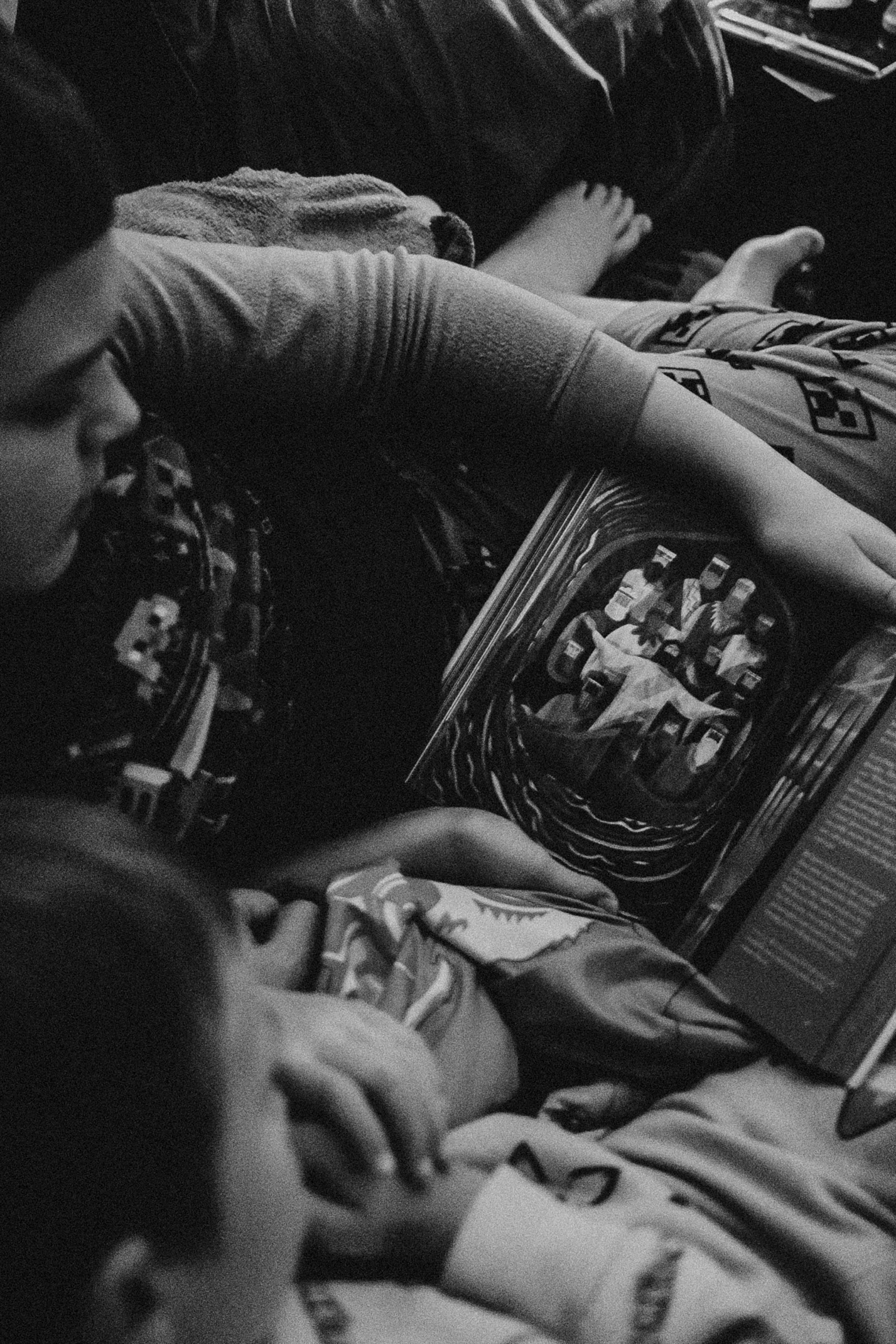
For the first time in what felt like a long while, the apartment filled with their full-day noise. Toys on the floor. Snacks. Little feet. The clatter of LEGOs being poured out like a plastic avalanche. My oldest telling elaborate stories with no concern for plot holes. My youngest moving through the house with the confidence of a tiny man determined to discover every object that should not go in his mouth.
Outside, the world was anxious.
Inside, we had time.
That time did not erase the difficulty of the season, but it gave me enough room to remember that life could be more than reaction.
Useful Work Restores Something
Before the shutdown, I had been working at the school doing content shoots, design tasks, and odd marketing jobs. I had done that kind of work professionally for years, but in that season, the feedback landed differently.
Someone asked for something.
I made it.
They said thank you.
That may sound small. It was not.
When your life has been shaped by instability, simple usefulness can feel like a door opening inside a locked room. I could do something and it helped. I could make something and someone saw it. I could bring order, beauty, communication, or clarity into a project and the result did not vanish into chaos.
It came back as trust.
That trust mattered.
Not only from other people. From me.
I began to remember that my hands could still make things that worked.
The Church Job and the Empty Room
Before the pandemic hit, my pastor had already asked whether I would be interested in working with the church.
Then churches everywhere had to figure out how to become digital overnight. Sermons moved online. Worship teams stood in empty rooms. Cameras became pulpits. Livestream links became doors. People who had never cared about audio routing suddenly cared very much, because nothing reveals the limits of modern ministry like a microphone that makes a pastor sound like he is preaching from the bottom of a well.
The building was only blocks from our apartment.
That mattered. Everything in that season was measured by proximity, time, childcare, gas, and how much energy a transition would cost. A job close by felt like mercy. A remote role felt like even more mercy.
The sanctuary felt different without people in it. Empty chairs. Stage lights. Cables. Cameras. A slight echo in a room built for voices but emptied of them. Ministry had to travel through lenses and screens, and I understood enough of both worlds to help.
Pieces of my life I thought had gone dormant became useful again.
Church leadership. Design. Communication. Photography. Video. Web work. The ability to look at a messy situation and figure out how to get a message from one place to another.
All of it mattered.
Trust Returns Through Evidence
Confidence did not return because I told myself to be confident.
It returned through evidence.
A project finished. A service streamed. A graphic created. A photo edited. An assignment completed. A client served. A day where the boys were fed, the work moved forward, and nothing collapsed beyond repair.
After a season that made me question my own judgment, evidence mattered. I needed more than encouragement. I needed proof. Not proof that I was fully healed or that everything was fine. Proof that I was still capable of learning, creating, solving, and finishing.
Creative work gave me that proof one small piece at a time.
This is one of the reasons I encourage creators to finish things. Not everything. Not every idea. Not every half-formed concept that wanders through your brain like it owns the place.
But something.
Finished work becomes evidence. It tells your mind, “I can still do this.” It gives your confidence something concrete to stand on.
The Camera Helped Me See Again
The camera remained part of the story.
At first, it had been practical. A way to earn money. A way to serve clients. A way to create visual content for work that needed to be done. But slowly, it became a way to see again.
When life has trained you to scan for danger, beauty can feel almost irresponsible. Your attention narrows. You notice threat, tension, bills, deadlines, and every little sign that something might go wrong. The body learns to brace before the mind knows why.
Photography interrupted that.
A camera asks you to pay attention differently. Light on a wall. The shape of an empty sanctuary. The color of Montana sky through a window. My sons’ faces while they built something on the floor. The quiet dignity of ordinary rooms where life is being rebuilt.
The act of making an image gave my attention somewhere else to go.
Not away from reality.
Deeper into it.
That distinction matters. Creative work is not always escape. Sometimes it is a way of returning to the world with enough focus to notice what is still good.
What This Means for Creators
If you are in a season where you do not trust your work, start by making something small enough to finish.
Do not wait for full confidence. Do not wait for the perfect plan. Do not wait until your life feels clean and settled. Confidence often follows completion more than it precedes it.
Make the article. Edit the gallery. Build the page. Create the template. Send the proposal. Finish the small product. Solve one visible problem. Let the finished thing become evidence.
This is not about proving your worth to the world.
It is about rebuilding trust with yourself.
Every creator has seasons where the work feels shaky. Sometimes because life has been hard. Sometimes because the market has changed. Sometimes because you have grown and your old work no longer fits. The way back is usually not a speech. It is a practice.
Hands on the work.
One useful thing finished.
Then another.
Little by Little
I did not know how much that season would shape the work I do now.
I did not know that the systems I built to survive would become frameworks I would later teach. I did not know that the camera work, church communications, school marketing, design, parenting, and late-night learning would eventually braid together into books, courses, editing tools, articles, and practical resources for creators.
I only knew that we had been given time.
And after years of crisis, time felt like wealth.
The days were not easy. There were still hard conversations, old wounds, legal realities, and grief waiting in the quiet. But there was also laughter. Income. School. A camera. Work I could do. Two boys home with me, filling the apartment with noise and need and life.
Trust returned slowly.
Not because everything was fixed.
Because I kept making things, and the things kept holding.
Trust Needs Evidence
For a long time, I wanted confidence to return as a feeling.
It did not.
It returned as evidence. A project finished. A church service brought online. A design that helped someone communicate. A photograph that felt alive. A paycheck that arrived because I had made something useful.
That evidence mattered because fear is a loud storyteller. It will tell you that the past has final authority. It will tell you that the old instability knows more than the new work you are trying to build. But finished work begins to argue back. Quietly at first. Then with more strength.